


Stanley Diversifies Beyond Quencher, Expands Global Lifestyle Brand
Stanley 1913, the 113-year-old drinkware company, is shifting its focus from the Quencher, which once made up 80% of its business, to a broader lifestyle brand. The company’s recent collaboration with Brazilian fashion brand Farm Rio sold nearly 50% of its inventory in the first week, exceeding expectations. This rapid sell-through was particularly notable as it nearly achieved the four-week sales target in just seven days, showcasing the strong consumer response to the partnership.
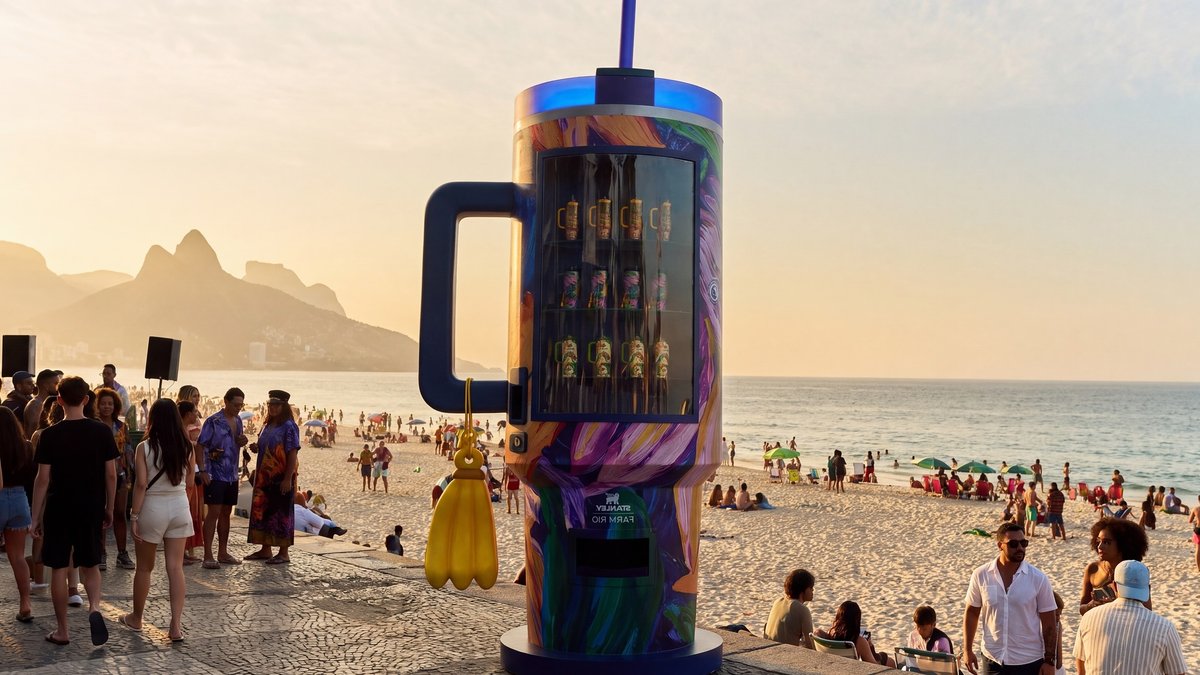
The Farm Rio collection, featuring tropical prints on Quenchers, bottles, and a soft cooler, priced between $55 and $155, saw six of its ten top-selling products come from this collaboration. This success comes as Stanley expands its product range and distribution beyond North America. The collection’s global launch on August 18 was supported by events in New York, where products sold out within hours, and a unique Rio de Janeiro beach activation featuring a Quencher-shaped vending machine. The Tropical Woods print reached almost 100% global sell-through in less than a week.
Expanding Beyond the Quencher
The Quencher, while still the top-selling product, now accounts for around 40-50% of Stanley’s global product mix. The company is diversifying into café products, fitness products, coolers, lunch bags, and backpacks. Ben James, Stanley’s general manager for EMEA, emphasized the company’s ongoing growth momentum, even as it scales into new markets and distribution channels.
Kate Ridley, Chief Brand Officer of PMI WW Brands, LLC, explains that Stanley tracks customer behavior over a six-month period after collaborations. This long-term view helps the company understand how limited-edition drops can lead to sustained brand engagement. Stanley looks at how consumers acquired through collaborations engage with the brand after their initial purchase.
Related Post: Where to Find Custom Sapphire Engagement Rings in Glasgow
Collaborations and Customer Engagement
Stanley’s collaborations, like the one with Farm Rio, are not just about initial sales but about building a relationship with customers. The Farm Rio partnership targeted overlapping communities interested in color, design, and self-expression. Unlike collaborations with celebrities like Olivia Rodrigo or Lionel Messi, which often focus on introducing the brand to new demographics, the Farm Rio partnership aimed to deepen connections with existing audiences. This approach aligns with Stanley’s strategy of using collaborations as an entry point to learn more about customer preferences.
Discounts as a Strategic Tool
As Stanley aims to attract new customers, it is reconsidering its approach to discounts. Historically, the brand has used promotions sparingly, but Ridley notes that discounts can serve as an entry point for shoppers hesitant to spend around $50 on a water bottle. Stanley groups these customers into cohorts to measure their long-term engagement and subsequent purchases. The company coordinates offers with wholesale and marketplace partners, including Amazon, sometimes pairing promotions with exclusive products.
Ridley acknowledges that Stanley is in a “discovery phase” regarding discounts, as it has not traditionally relied heavily on markdowns. “We are not a very promotional brand. We don’t do it very often, and we recognize that, in the future, we could probably do more of it,” she said. The company also faces the challenge of balancing extended promotional periods with the need to maintain urgency. “On one hand, there’s the opportunity to extend,” Ridley said. “On the other, there’s the need to drive urgency related to a shorter time frame.”

Beauty Experts Launch Brands, Discuss Challenges


